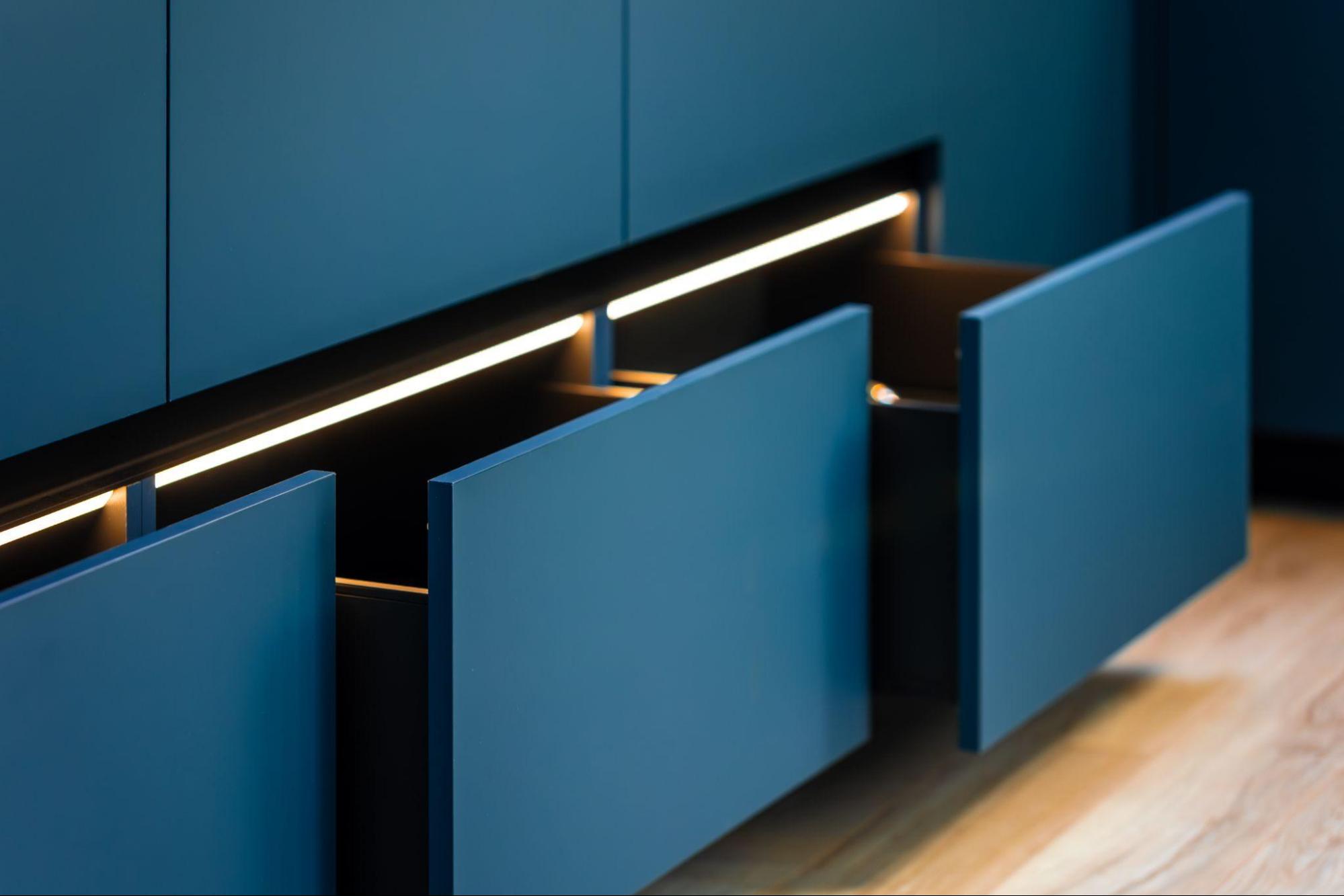
Kitchen cabinet wrapping and full replacement solve the same problem: A kitchen that has dated or been damaged beyond a simple refresh, through different means and at very different costs. Various factors determine which fits: the condition of the existing carpentry, budget set aside for the work, time constraint and environment safety for the work.
What Is Kitchen Cabinet Wrapping?
Kitchen cabinet wrapping resurfaces existing carpentry with a vinyl sticker film rather than removing, rebuilding or re-laminating it. The sticker adhesive film overlays directly over doors, drawer fronts, and end panels, changing the finish without touching the structure underneath.
Doors, drawer fronts, and the carcass stay exactly where they are throughout the job. Only the visible surface changes. Full replacement takes everything out and rebuilds from the cabinet box up, which changes everything else about cost, timeline, and how usable the kitchen stays while the work is underway. Health hazard is also a consideration as exposure to formaldehyde from traditional laminate can trigger respiratory issues, eye irritation, and allergies. Formaldehyde off-gasses slowly which means traditional laminate can release low levels of toxins for years after installation!
What Determines Whether a Wrap Holds Up in a Singapore Kitchen
Film grade governs how a wrap performs near a hob. Cast vinyl conforms to curves and resists shrinkage under sustained heat and humidity, while calendared film tends to pull away at the edges once the material starts to contract. Singapore’s cooking steam and year-round humidity bring that difference forward faster than a drier climate would.
Approval is rarely a hurdle. Cabinet wrapping is treated as non-structural, reversible work because it changes a surface rather than a layout, and most jobs proceed without any sign-off.
Material and finish selection is where a kitchen cabinet vinyl wrap earns its keep, since the film grade chosen at this stage decides whether the kitchen still looks new in five years or is already lifting at the corners.
Edge sealing is the detail that separates a wrap that lasts from one that doesn’t. Panel edges, hinge cutouts, and handle holes need trimming and pressing individually, since any gap left unsealed becomes the point where humidity gets underneath the film first.
What Are the Disadvantages of Wrapping Kitchen Cabinets?
Kitchen wrapping only changes the surface, so it carries three limitations worth knowing before requesting a quote.
- Structural issues are not fixed. Swollen boards, failing hinges, or a layout change need replacement, not a wrap.
- Film quality decides the outcome. Generic vinyl in humid conditions can lift within one to two years, whereas commercial-grade film lasts much longer.
- Removal carries risk on weaker substrates. Poor quality film or rushed removal can damage the surface underneath, particularly on MDF.
Where a hinge has failed or a door itself has warped, the fix sits with the door repair service rather than a straightforward wrap, since a compromised door needs attention that a surface change alone cannot give it.
Is Wrapping Kitchen Cabinets Worth It?
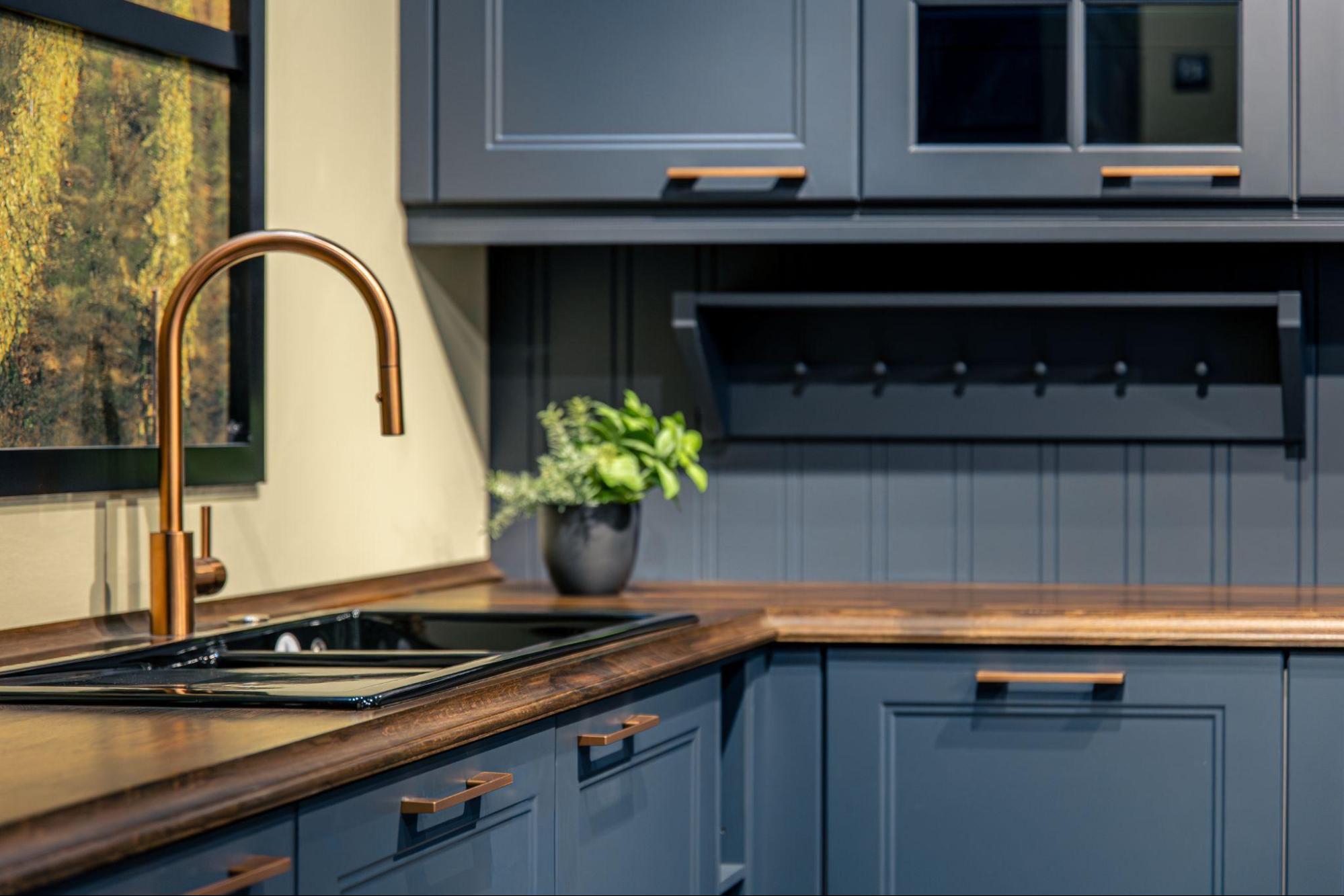
Whether it’s worth it comes down to the same set of variables mentioned at the start: carpentry condition,budget, timeline and health consideration. For a standard HDB kitchen where the structures are sound, wrapping runs roughly $1,200 to $3,800 against $8,000 to $20,000 for full replacement, a significant financial gap to consider before installation time is even factored in.
Timeline reinforces the difference. A wrap can be completed in a day or two, with the kitchen usable throughout, while a full replacement disrupts cooking for one to three weeks.
Wrapping suits kitchens where the carpentry is sound and only the exterior finish has slight wear & tear in aesthetics
Full replacement makes more sense where boards have swelled or the layout itself needs to change. If unsure, brief discussion or a site visit by installers can help advice further.